Every SMT line faces the same trade-off: capital sitting on a shelf versus a stopped line waiting for a courier. The right answer is arithmetic, not instinct — and it is different for a high-mix line than for a single-product one.
Start with three numbers per part
- Failure or consumption frequency — how many units per quarter, per head or per feeder position.
- Replacement lead time — from the moment you order to the moment it is in your hand. Include customs.
- Cost of the line being stopped — per hour. Most plants know this number; the ones that do not should calculate it first.
Multiply lead time by hourly line cost and you get the exposure of not holding that part. Compare it with the part price. The parts where exposure dwarfs price belong in the kit; the rest can be ordered on demand.
What ends up in almost every kit
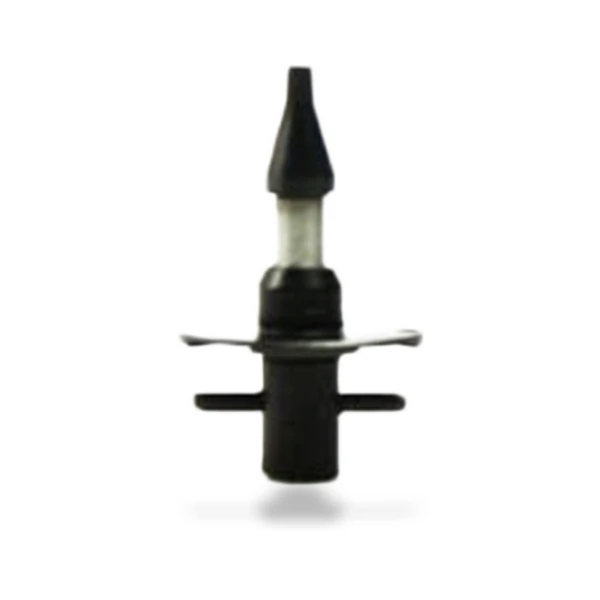
- Nozzles in the top three sizes actually used — one full head set plus spares, per head type. Nozzles are the highest-frequency consumable on any line.
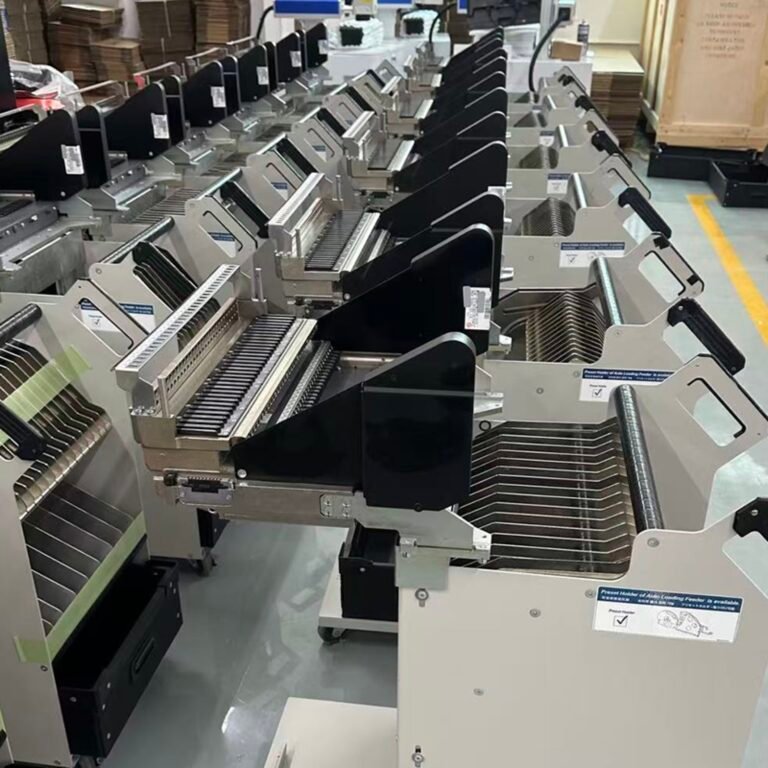
- Feeder parts — sprockets, tension springs and peel-path components for the dominant feeder width.
- One spare feeder of the most-used width — swap-and-repair beats diagnose-under-pressure.
- Filters — nozzle and vacuum filters, replaced on interval not on failure.
- Belts — conveyor and timing belts in the sizes your handling equipment uses.
- Sensors — the one or two photo/fibre sensor models that appear repeatedly across your platforms.
The high-mix adjustment
A high-mix line changes the calculation in one important way: you run more distinct nozzle codes at lower volume each, so per-code consumption is lower but total fragility is higher — one missing code stops a product that may be your most profitable. For these lines, hold a full head set of every code used on a running product, and buy the long tail on demand.
Review it twice a year
Re-run the lead-time and line-cost arithmetic every six months. Lead times move, product mix moves, and a kit sized in 2023 is usually holding the wrong things by 2026. The review itself takes an hour and typically releases more shelf value than it adds.