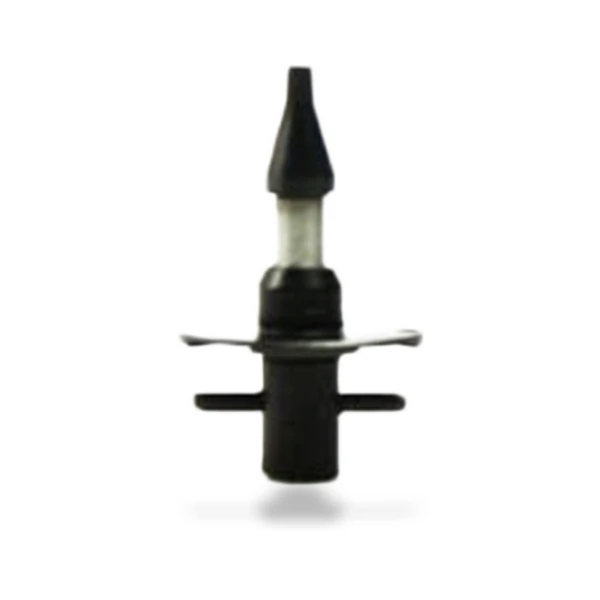
Nozzles rarely fail. They degrade, and degradation masks itself as a process problem: vacuum faults, placement offsets, feeder errors, vision rejects. Here are the six symptoms that most often trace back to the tips themselves.
1. Rising pick errors concentrated on small parts
The tell is distribution. If misses cluster on the smallest components and the rate climbs gradually over weeks, the bore is wearing and the vacuum column is weakening. Small parts have the least surface area to seal against, so they fail first. Check the pick-error rate by component size, not in aggregate.
2. Placement offsets that vision cannot explain
A nozzle that no longer seats perpendicular to the head tilts the component slightly on pickup. Vision finds the part correctly and places it correctly relative to what it sees — and the joint is still off. When calibration is clean and offsets persist, suspect the tip face rather than the camera.
3. Vacuum pressure readings drifting at the head
Log the head vacuum at a fixed point in the cycle, weekly. A gradual decline with no change in the vacuum generator points at the nozzle bore, the O-ring seat or a partially blocked filter. Trend it — a single reading tells you nothing.
4. Tip face damage you can see at 10×
Chipped edges, a polished or flattened contact face, discolouration from heat, a burr at the bore. Examine a sample under 10× magnification once a month. Photography is better than eyeballing: a monthly photo series shows change that a single inspection misses.
5. Components nicked or dented on the top surface
A worn or burred tip transfers a mark to the component body. It rarely causes a functional failure immediately, so it is often tolerated — until a customer inspecting incoming boards rejects the lot on cosmetic grounds.
6. Consumption rate climbing without a change in volume
The clearest signal of all, if you track it: units consumed per head per quarter against production volume. If that ratio rises while volumes are flat, you are changing nozzles more often than you should — which usually means the nozzles you are buying wear faster, not that the line got harder.
What good practice looks like
- Track nozzles by head position, not by line. Wear is not evenly distributed.
- Keep a known-good reference nozzle of each code and compare against it, not against memory.
- Replace in sets across a head where practical — mixed wear levels make diagnosis harder.
- Record the part number and supplier batch for every replacement. When a batch underperforms, you will want to know which one it was.